
Found a Snake in Your Backyard? Here's What You Should (and Shouldn't) Do

You're enjoying a quiet afternoon in the garden, perhaps watering the plants or preparing to mow the lawn, when something moves in the corner of your eye.
You look again. There's a snake.
Suddenly, mowing the lawn doesn't seem quite so important.
Finding a snake in your backyard can be an unsettling experience, particularly if you have young children or pets. However, before you reach for the nearest broom, garden hose or shovel, there are a few things you really need to know.
Here in Brisbane, snake encounters are a normal part of living alongside our native wildlife. The good news? Most snakes would much rather avoid you than start an argument.
So, what should you actually do when an unexpected reptilian visitor turns up in your garden?
First Things First: Don't Panic!
It's easier said than done when you've just spotted a metre-long snake disappearing beneath your outdoor furniture, but staying calm is the most important first step.
Snakes don't generally look for confrontations with humans. In fact, most would prefer to escape unnoticed.
However, when a snake feels cornered, threatened or unable to escape, it may defend itself.
If you discover a snake in your backyard:
- Stop what you're doing and remain calm.
- Slowly move away, giving the snake plenty of space.
- Keep children and pets away from the area.
- Avoid sudden movements or attempts to approach the snake.
- Contact a licensed snake catcher if the snake poses a risk or needs removing.
Whatever you do, don't assume a snake is harmless simply because it isn't behaving aggressively.
What Should You Do If You Find a Snake in Your Backyard?
1. Keep Your Distance
Your first priority should always be safety.
Never approach a snake to get a better look, even if it appears to be resting or moving slowly.
Some snakes remain completely still when they sense danger, while others may attempt to escape. Neither behaviour tells you whether the animal is venomous.
Give the snake plenty of room and allow it an unobstructed escape route.
2. Bring Children and Pets Indoors
Children are naturally curious, and dogs aren't exactly famous for making sensible decisions when something unfamiliar moves across the lawn.
If you spot a snake, calmly bring everyone inside.
Keep pets secured until you're confident the area is safe. Don't allow your dog to investigate, bark at or chase the snake.
If you suspect your pet has been bitten, contact an emergency veterinarian immediately, even if your pet initially appears well.
3. Keep Track of the Snake From a Safe Distance
One of the biggest challenges for professional snake catchers is arriving at a property only to discover that the snake has disappeared.
Snakes can move surprisingly quickly and may take shelter beneath garden sheds, decking, retaining walls or dense vegetation.
If it's safe, observe the snake from well away without following or disturbing it.
Knowing its last location can be helpful when speaking with a snake catcher.
However, don't put yourself at risk trying to keep the snake in sight. If it disappears, leave the area alone rather than searching through potential hiding places.
4. Contact a Licensed Snake Catcher
If the snake is near your house, outdoor entertaining area, children's play equipment or anywhere people regularly walk, professional assistance is the sensible option.
Licensed snake catchers have the experience and equipment needed to assess the situation and undertake safe, lawful removal where required.
We provide access to experienced snake-catching professionals throughout Brisbane and surrounding areas.
For assistance, visit Snake Catchers Brisbane or call 0413 028 081.
Five Things You Should NEVER Do When You Find a Snake
Sometimes, knowing what not to do is even more important than knowing what to do.
1. Don't Try to Catch It Yourself
Even if you've watched every Australian wildlife programme ever made, catching a wild snake is not a DIY project.
Snakes can react quickly when threatened, and attempting to grab one with your hands, a towel or a makeshift tool significantly increases your risk of being bitten.
Leave snake handling to appropriately licensed professionals.
2. Don't Attempt to Kill the Snake
Apart from being dangerous, deliberately killing or injuring a native snake is generally illegal in Queensland.
Snakes are protected wildlife under the Nature Conservation Act 1992.
Attempting to strike a snake with a shovel or other object can provoke a defensive response and potentially result in a serious bite.
The safest approach is to leave the animal alone.
3. Don't Spray It With Chemicals
Forget the insect spray, bleach, petrol or other household chemicals.
These products aren't a safe or humane solution to a snake encounter and could harm people, pets or the surrounding environment.
4. Don't Corner or Chase It
Trying to frighten a snake out of your garden by chasing it with a broom or throwing objects can make the situation considerably worse.
A frightened snake may retreat into a more difficult location or defend itself if it cannot escape.
5. Don't Rely on Colour to Identify It
Not every brown snake is an eastern brown snake, and not every dangerous snake is brown.
Snake identification can be complicated because colours and markings vary considerably between species and individual animals.
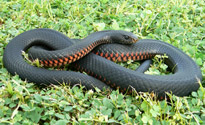
Brisbane is home to several different snake species, including eastern brown snakes, red-bellied black snakes, carpet pythons and common tree snakes.
You can learn more about these reptiles through our Australian Snake Identification Guide.
However, photographs and online identification guides should never be used as justification for approaching or handling a snake.
Why Do Snakes Enter Brisbane Backyards?
Here's something that might surprise you.
That snake probably isn't particularly interested in your house, your swimming pool or your weekend barbecue.
It's usually looking for one of three things: food, shelter or a suitable place to regulate its body temperature.
Brisbane backyards can offer all three.
Common attractions include:
- Long grass and overgrown garden beds that provide cover.
- Timber stacks, garden debris and cluttered sheds.
- Rodents attracted by pet food, rubbish or birdseed.
- Frogs and other small animals that snakes feed on.
- Sheltered spaces beneath decking, retaining walls and outdoor structures.
Even a beautifully maintained garden can occasionally attract snakes, especially when suitable habitat exists nearby.
Finding one doesn't necessarily mean your property is poorly maintained.
Will a Snake Leave Your Backyard on Its Own?
Quite often, yes.
Many snakes are simply passing through and will continue on their way if left undisturbed.
However, there's an important difference between a snake moving through a quiet corner of the garden and one sheltering beneath the family barbecue.
If a snake is close to your home, pets or regularly used outdoor areas, don't assume it will disappear before somebody accidentally encounters it.
Keep the area clear and contact a licensed snake catcher for advice.
What Happens If the Snake Disappears Before Help Arrives?
This is a common scenario.
One minute, the snake is clearly visible beside the garden shed. The next, it's vanished.
Unfortunately, snakes are exceptionally good at finding hiding places.
If this happens:
- Remember where you last saw the snake.
- Keep children and pets away from that area.
- Avoid moving garden furniture, pot plants or stored materials.
- Don't reach beneath decking, sheds or other concealed spaces.
- Explain the circumstances to your snake catcher.
Never assume the snake has left your property simply because you can no longer see it.
How Can You Reduce the Chances of Snakes Entering Your Backyard?
Although there's no guaranteed way to make an outdoor area completely snake-free, a few sensible changes can make your property less attractive to visiting reptiles.
- Keep your lawn maintained. Shorter grass improves visibility and reduces potential hiding places.
- Remove unnecessary clutter. Old building materials, timber piles and unused garden equipment can provide shelter.
- Manage rodents. Store pet food securely, clean up fallen birdseed and keep rubbish bins closed.
- Maintain garden beds. Regularly trim dense vegetation, particularly around entrances and frequently used areas.
- Check potential entry points. Where practical, seal gaps around buildings, sheds and external structures without trapping wildlife inside.
- Take care when gardening. Wear enclosed shoes, long trousers and gloves, and never place your hands somewhere you cannot see.
These measures won't eliminate every snake encounter, but they can reduce the conditions that attract snakes and their prey.
What If Someone Is Bitten by a Snake?
A suspected snake bite is a medical emergency, even if there is little pain or no obvious bite mark.
Call 000 immediately.
Keep the person as still as possible and apply pressure-immobilisation first aid using a suitable bandage, following current Australian first-aid guidance. Immobilise the affected limb and wait for emergency assistance.
Do not wash the bite, apply a tourniquet, cut the wound or attempt to suck out venom.
Most importantly, never attempt to catch or kill the snake for identification.
Emergency medical treatment takes priority over snake removal.
Frequently Asked Questions
Should I run away if I see a snake in my backyard?
No. Avoid sudden movements. Calmly back away to a safe distance and leave the snake undisturbed.
Can a snake enter my house from the backyard?
Yes. Snakes may enter through open doors or suitable gaps around buildings. Keeping external doors closed and checking potential entry points can reduce the risk.
Are snakes more common in Brisbane during summer?
Snake activity generally increases during warmer weather, although encounters can occur at other times of the year. Brisbane's climate allows some species to remain active outside summer.
Should I try to identify the snake before calling a snake catcher?
No. You don't need to identify the species yourself. A description or photograph taken from a safe distance may be useful, but never approach a snake just to obtain one.
Is it safe to let my dog outside after a snake disappears?
Not until you're confident the area is safe. A snake may still be sheltering nearby, even if you can no longer see it.
Found a Snake in Your Backyard? Let the Professionals Handle It
Finding a snake in your backyard can certainly get the heart racing, but the most important thing is to avoid turning an unexpected encounter into a dangerous situation.
Stay calm, keep your distance, bring children and pets indoors, and never attempt to catch or harm the animal.
Remember, snakes play an important role in Queensland's natural environment, and most encounters can be managed safely when the animal is given space.
If you've discovered a snake around your Brisbane home and need professional assistance, Snakecatchers.com.au can help connect you with experienced, licensed snake catchers in your area.
Visit Snake Catchers Brisbane or call 0413 028 081 for assistance.
When it comes to snakes, there's one DIY job that's always best left to the professionals!



Copyright © 2015 Brisbane Snake Catchers, All rights reserved.
Web site by Serenity Computer Services